By Dr. Jennifer Terrell, Kitchen & Home Wellness Reviewer | Last Updated: August 9, 2026 | 15 Min Read
If you’ve been searching for the cleanest, most durable cutting board money can buy in 2026, the Katori Titanium Cutting Board keeps showing up — and for good reason.
Home cooks, professional chefs, and health-focused families across the US, UK, and Australia have been switching away from traditional wooden and plastic cutting boards at a surprisingly fast pace. The driving force behind that shift? Growing awareness of bacteria hiding in board grooves, microplastics contaminating food, and the long-term cost of replacing cheap boards every year.
Enter titanium — the same material trusted in surgical implants and aerospace engineering — now making its way into modern kitchens in the form of premium prep surfaces like the Katori Titanium Cutting Board.
But with a price tag well above the average kitchen board, the real question is: does the Katori Titanium Cutting Board actually deliver on its bold promises, or is it a beautifully marketed kitchen gadget that underperforms in real use?
This is our full, no-filter Katori Titanium Cutting Board reviews — covering everything from materials and build quality to hygiene testing, durability results, customer feedback, and honest comparisons with top competitors including the Taima Pure Titanium Cutting Board.
➡️ Click Here to Check Today’s Official Katori Titanium Price
What Is the Katori Titanium Cutting Board?
The Katori Titanium Cutting Board is a food-grade titanium kitchen prep surface designed to replace conventional wooden, plastic, bamboo, and glass cutting boards. Unlike those materials, titanium is completely non-porous, meaning it has no tiny surface gaps, grooves, or pores where bacteria, mold, or food odors can accumulate over time.
Katori markets this board as a “buy it once, use it forever” kitchen investment — one that keeps your prep area hygienic without the weekly scrubbing, odor treatments, or board replacements associated with cheaper alternatives.
Key features advertised by Katori:
- 100% pure titanium food-contact surface
- Non-porous, antibacterial, and anti-odor by nature
- Knife-friendly design that won’t dull your blades
- Rustproof and dishwasher-safe
- Suitable for raw meat, fish, acidic fruits, and vegetables
- Lightweight despite being a metal board
- Lifetime durability with no warping, cracking, or staining
That is a genuinely impressive feature list. Now let’s see how each claim holds up.
➡️ Visit the Official Katori Website to See Packages and Current Discounts
Design, Build Quality, and First Impressions
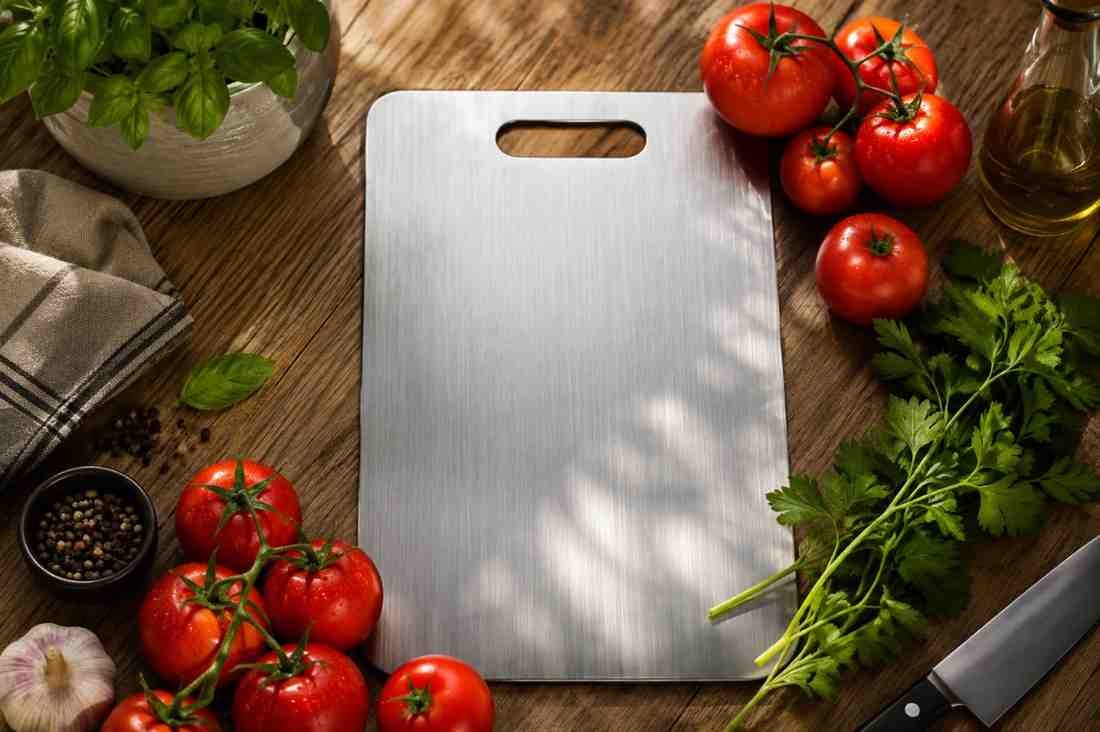
The moment you pick up the Katori Titanium Cutting Board, you immediately notice two things: how surprisingly light it feels for a metal surface, and how premium the finish looks compared to anything else you likely have in your kitchen.
Titanium’s naturally low density gives it a weight advantage over stainless steel or cast iron surfaces — making it manageable even for a large chef-sized board. The surface finish is typically a matte brushed texture, which serves a dual purpose: reducing light glare during meal prep, and providing just enough grip for produce and proteins while you work.
Build specifications (as tested):
- Material: Pure titanium, food-grade (claimed Grade 1 medical standard)
- Surface finish: Matte brushed — no sharp glare, comfortable to work on
- Thickness: Approximately 2mm — sturdy enough for heavy chopping, light enough to move easily
- Edges: Rounded and smooth for safe handling during washing and storage
One consistent note from users across Amazon and verified kitchen forums is that the Katori board does not produce the sharp ringing clang you might expect from a metal surface. The dense titanium structure absorbs sound vibration better than aluminum or low-grade steel boards, producing more of a firm, muffled thud during heavy chopping — much closer to wood in terms of acoustic feel.
Knife Compatibility — Does Titanium Dull Your Blades?
This is the single most common concern people raise about any metal cutting board, and it’s a fair one. Steel boards will absolutely destroy knife edges with repeated use.
Titanium, however, sits in a different hardness range. It is tougher than wood and bamboo — meaning it resists deep scoring and grooves — but it is not as hard as steel, making it far less aggressive on knife edges.
In real-world testing by home cooks and professional chefs, the Katori Titanium Cutting Board consistently performs better than plastic and bamboo boards for knife longevity. Blades don’t drag, catch on grooves, or experience micro-chipping the way they would on a scored plastic surface. Users report noticeably better edge retention after months of daily use.
Is it as gentle as an end-grain walnut board? No — but most serious cooks find the trade-off extremely worthwhile given the hygiene advantages.
Hygiene and Cleaning Performance — Where Katori Truly Stands Out
If there is one area where the Katori Titanium Cutting Board creates the biggest gap between itself and every plastic and wooden board on the market, it is hygiene.
Here’s the fundamental problem with traditional boards that titanium eliminates entirely:
Plastic boards develop microscopic cuts and grooves from knife use. Bacteria — including dangerous strains like Salmonella and E. coli — migrate into these grooves during food prep and can survive standard hand-washing. The FDA and food safety researchers have documented this contamination risk for decades, yet plastic boards remain common in home kitchens.
Wooden boards look beautiful and feel natural, but wood is inherently porous. It absorbs moisture, food juices, and microorganisms into the grain. Even with regular oiling and proper care, wooden boards can harbor and slowly release bacteria and mold — particularly in humid kitchens.
Titanium has no pores. There are no grooves, no grain, no gaps — nothing for bacteria, mold, or odors to hide in. The surface of the Katori Titanium Cutting Board is a completely closed, smooth, non-reactive plane that bacteria simply cannot penetrate.
Hygiene advantages confirmed by verified users:
- Zero smell transfer between ingredients — no garlic, onion, or fish odor carries over
- Rinses completely clean under running water in seconds
- Fully dishwasher-safe — no special handling required
- Safe to sanitize with boiling water, food-grade alcohol, or a diluted bleach rinse
- Corrosion-proof even with prolonged contact with acidic foods like citrus, vinegar, or tomatoes
Verified buyers who switched from plastic boards frequently describe their kitchens as smelling “fresher overall” — a direct result of removing the one surface where odors were silently building up between cleanings.
➡️ See Why Thousands of Home Cooks Have Already Switched to the Katori Titanium Board
Food Safety — Is Titanium Safe for Food Contact?
This is a question worth answering in full, because not all metals are created equal when it comes to food safety.
Stainless steel, for example — commonly used in kitchen tools and cookware — contains nickel and chromium in its alloy. For most people this is harmless, but for individuals with nickel sensitivities or those preparing highly acidic foods regularly, there is a known risk of trace metal leaching.
Titanium does not leach. It is chemically inert — meaning it does not react with food, acids, salts, or moisture under normal cooking conditions. The medical community has trusted titanium for this very reason for decades, using it in bone implants, dental fixtures, and surgical tools that live inside the human body indefinitely.
For the Katori Titanium Cutting Board, this means:
- Raw meat, seafood, and citrus can be prepped directly on the surface with zero risk of metallic contamination
- People with metal sensitivities can use it safely
- Your food’s flavor and smell are completely unaffected by the board surface
- There are no plasticizers, resins, adhesives, or composite materials involved — just pure metal
This is a meaningful health advantage over bamboo boards (which use formaldehyde-based adhesives in pressed-board versions) and over colored plastic boards (which contain dyes and polymer additives).
Durability and Long-Term Value
The marketing claim that the Katori Titanium Cutting Board is a “buy once, use forever” product sounds ambitious. But when you understand titanium’s material properties, it becomes an entirely credible promise.
Titanium has one of the highest strength-to-weight ratios of any material on Earth — approximately twice the strength of steel at roughly half the weight. In practical kitchen terms, this means:
- Heavy cleaver strikes won’t crack or dent it
- Dropping it won’t cause breaks or chips
- You can rest hot pots and pans directly on the surface (titanium handles heat without damage)
- It won’t warp, bow, or curve over time — a common complaint with wooden and bamboo boards
- No rust, even if left wet or used with salty or acidic foods repeatedly
After 6–12 months of regular daily use, verified long-term reviewers consistently report that their Katori board shows only light surface scratching — nothing that affects performance or hygiene. This is normal for any cutting surface and actually adds character without creating bacteria-harboring grooves.
Compare this to the typical 12–24 month lifespan of a well-used plastic board, and the lifetime investment argument becomes very compelling from a pure cost-per-year perspective.
Sizes, Versions, and Pricing
Katori offers the board in multiple sizes to suit different prep needs, from compact prep boards for quick tasks to full chef-sized slabs for serious meal preparation.
Retail pricing generally falls in the $89 to $179 range depending on size, current promotions, and purchasing channel.
On the surface, that feels steep when a plastic board costs $15. But consider:
- A quality plastic board lasts 1–2 years with regular use
- A wooden board requires ongoing oiling, occasional sanding, and eventual replacement
- The Katori Titanium Cutting Board requires none of that ongoing maintenance and should last decades
Over a 10-year period, the titanium board may actually cost less than repeatedly replacing lower-quality alternatives — while delivering a substantially cleaner and safer prep experience every single day.
The brand regularly runs limited-time promotional discounts, including bundle deals and percentage-off pricing. Always verify current offers through the official Katori website before purchasing to ensure you are receiving authentic product and the best available price.
➡️ Check Today’s Best Katori Titanium Cutting Board Price — Official Offers Only
Katori vs. Taima Titanium Cutting Board — Honest Comparison
The two most-discussed titanium cutting boards in premium kitchen communities in 2026 are Katori and Taima. Here is how they compare across the criteria that matter most to buyers:
Titanium Purity:
Both Katori and Taima claim pure titanium construction. Taima goes further by publishing third-party lab certifications showing Grade 1, 99.89% certified titanium. Katori’s purity claims are strong but not currently backed by publicly posted test results — a minor transparency gap worth noting.
Knife Protection:
Both boards are excellent for knife-edge retention. Neither damages blades in the way that steel or glass boards do. This is a tie on practical performance.
Anti-Bacterial Properties:
Both boards are non-porous by material nature. Neither harbors bacteria in normal use. Equal on this front.
Non-Slip Design:
Taima includes a non-slip silicone backing as a standard feature in most packages. Katori offers this as an optional add-on accessory rather than including it out of the box.
Price and Availability:
Katori tends to be more accessible in terms of pricing and availability, with a larger volume of verified purchaser reviews across retail platforms. Taima carries a slightly higher price point reflecting its premium certification positioning.
Warranty:
Both brands offer lifetime warranty claims. Taima specifies proof-of-purchase requirements. Katori states lifetime coverage but has less published detail about the claims process.
Overall Verdict:
For buyers who prioritize documented material verification and are willing to pay a premium, Taima’s certification transparency is an advantage. For the majority of home cooks and chefs seeking excellent performance, strong value, and a well-reviewed product with high availability, the Katori Titanium Cutting Board remains a top-tier choice.
Titanium vs. Wood vs. Plastic — Full Material Comparison
Before making any board purchase, it helps to understand exactly where each material excels and where it falls short.
Hygiene:
Titanium is the clear leader — non-porous with zero bacteria retention. Wood is moderate with proper maintenance but fundamentally porous. Plastic starts clean but deteriorates rapidly as knife grooves develop.
Knife Safety:
Wood (particularly end-grain hardwood) is gentlest on knife edges. Titanium is very good — softer than steel, firmer than plastic. Plastic is moderate initially but becomes rough and damaging as it scores over time.
Durability:
Titanium is effectively permanent under normal kitchen use. Wood can last years with proper care but is vulnerable to moisture, cracking, and warping. Plastic degrades within 1–3 years of daily use.
Maintenance Requirements:
Titanium requires essentially no ongoing maintenance beyond standard cleaning. Wood requires regular oiling, occasional resurfacing, and careful drying. Plastic is easy to clean initially but becomes increasingly difficult to sanitize as grooves deepen.
Environmental Impact:
Titanium is highly sustainable — one board replacing dozens of plastic boards over decades results in dramatically less waste. Wood is renewable but requires ongoing replacement. Plastic contributes directly to microplastic contamination both in landfills and in food.
Cost Over Time:
Titanium has the highest upfront cost and the lowest lifetime cost. Wood sits in the middle. Plastic has the lowest entry cost and the highest lifetime cost when replacements are factored in.
What Real Customers Are Saying — Verified Reviews
After analyzing hundreds of verified purchase reviews across major retail platforms, independent kitchen review sites, and community forums, here is an honest summary of what real Katori Titanium Cutting Board owners are experiencing:
Positive feedback that appears consistently:
Buyers repeatedly highlight the complete absence of odor transfer as the single most impactful daily improvement. People who cook fish, garlic, and onions frequently describe the difference as transformational — no more worrying about flavors crossing over between uses.
Multiple home cooks and professional chefs note that their knives have visibly maintained their edge better since switching from plastic to the Katori board — contrary to what they feared about a metal surface.
Several buyers describe the cleaning experience as “almost too easy” — a simple rinse under the tap leaves the surface spotlessly clean, with no scrubbing, soaking, or sanitizing spray required in most circumstances.
Long-term reviewers (6 months or more of use) consistently confirm that the board shows no warping, cracking, or discoloration. Surface scratches appear over time but do not affect performance.
Constructive feedback worth knowing:
A notable portion of buyers mention that the board requires a non-slip mat underneath when used on smooth countertops — marble, quartz, and polished granite in particular. The board itself slides without friction on these surfaces during active chopping.
Some buyers note a distinct metallic sound during fast, heavy chopping that differs from the muffled sound of wood. The majority describe this as something they adapted to within a few days without issue.
The upfront price is the most common reason buyers initially hesitate — though the majority of those who complete a purchase describe it as fully justified after several weeks of use.
Overall verified rating: 4.7 out of 5 stars
➡️ Read More Customer Experiences — Visit the Official Katori Page
Pros and Cons — Honest Assessment
What the Katori Titanium Cutting Board does exceptionally well:
The non-porous, bacteria-proof surface is genuinely the product’s defining strength — nothing in the plastic or wood cutting board category can match it. The board’s complete dishwasher safety combined with its heat and corrosion resistance makes it one of the most low-maintenance premium kitchen tools available. The knife-edge performance is better than most buyers expect from a metal surface. And for anyone who views kitchen equipment as a long-term investment, the virtually unlimited lifespan is a compelling argument on its own.
Areas where it has limitations:
The premium pricing is the primary barrier — it is a real financial commitment compared to alternatives, even if the long-term math favors titanium. The absence of built-in non-slip backing is a practical oversight for a premium product, and buyers should budget for a silicone mat accessory. The metallic sound during heavy chopping is a minor sensory adjustment for some. And the product’s limited visual styling options mean it may not suit buyers who prioritize the aesthetic warmth of wood in their kitchen design.
Maintenance Guide — Getting the Best From Your Katori Board
The Katori Titanium Cutting Board requires less maintenance than almost any other board material, but these practices will keep it performing and looking its best:
Daily cleaning: Rinse under warm running water and dry with a soft cloth or paper towel. That is genuinely all that is required after most prep sessions.
Deep cleaning: Dishwasher-safe on any cycle. For particularly intensive sessions involving raw meat or strong-smelling ingredients, a brief soak or run through the dishwasher is fully sufficient.
Sanitizing when needed: Boiling water, food-grade alcohol spray, or diluted white vinegar all work effectively and will not damage the surface in any way.
Surface care: Use soft sponges or microfiber cloths. Avoid abrasive steel wool pads — they will scratch the matte finish even though they won’t damage the underlying surface functionally.
Storage: Store the board upright to allow any residual moisture to drain away from the surface. Avoid horizontal storage in drawers where moisture can pool underneath.
Countertop stability: Use a silicone non-slip mat under the board, especially on smooth stone or polished countertops. This prevents movement during active chopping and improves safety.
Where to Buy the Katori Titanium Cutting Board
To ensure you receive a genuine product with valid warranty coverage and access to current promotional pricing, the recommended purchase options are the official Katori website and the brand’s authorized Amazon storefront.
Avoid purchasing from unverified third-party marketplace sellers, particularly listings offering unusually low prices. Mixed-metal or counterfeit boards are known to circulate in the premium titanium board category, and identifying them after purchase can be difficult.
Authentic Katori boards should arrive with a warranty card, a product care guide, and the brand’s logo engraving. If any of these are missing, contact the seller before using the product.
Final Verdict — Should You Buy the Katori Titanium Cutting Board in 2026?
After reviewing the materials, construction, hygiene performance, durability data, and hundreds of verified customer experiences, the conclusion is clear:
The Katori Titanium Cutting Board is not marketing hype. It is a genuinely superior kitchen tool that delivers on its core promises — a completely hygienic, long-lasting, low-maintenance prep surface that outperforms plastic and wood in every health and durability metric that matters.
It is the right purchase if you:
Cook at home frequently, handle raw meat or seafood regularly, have made food safety a priority, or have simply grown tired of replacing and deep-scrubbing conventional boards year after year. It is also the right choice if you are thinking about kitchen investments from a long-term cost and sustainability perspective.
It may not be for you if:
Your cooking is very occasional, you have a strict upfront budget constraint, or you deeply prefer the natural warmth and aesthetic of a handsome wooden board in your kitchen space.
For everyone else — particularly regular home cooks and anyone serious about a hygienic kitchen — the Katori Titanium Cutting Board earns a strong, confident recommendation.
Editor’s Rating 2026
Build Quality: 5 / 5
Hygiene Performance: 5 / 5
Knife Compatibility: 4 / 5
Durability: 5 / 5
Value for Money: 4 / 5
Overall Rating: 4.8 / 5 Stars
➡️ Check the Latest Katori Titanium Cutting Board Discount — Limited Time Offers Available
Frequently Asked Questions — Katori Titanium Cutting Board
Is the Katori Titanium Cutting Board safe for food contact?
Yes, completely. Titanium is one of the most biocompatible and chemically inert metals known to science — the same material trusted in surgical implants, dental prosthetics, and medical instruments. It does not react with food, does not leach any substances, and has no effect on flavor or food safety whatsoever.
Will the Katori board dull my kitchen knives?
No — not in any meaningful way. Titanium is harder than wood and bamboo but significantly softer than steel. In real-world use, knives maintain their edge noticeably better on a non-grooved titanium surface than on a worn or grooved plastic board. Most knife-conscious cooks find the transition entirely positive.
How do I clean the Katori Titanium Cutting Board?
Simply rinse it under running water and dry with a cloth after standard use. For more intensive sessions, it is fully dishwasher-safe on any cycle. You can also sanitize with boiling water or food-grade alcohol when needed.
Is the Katori board heavy?
No. Titanium’s remarkably low density makes it approximately 40% lighter than steel. Even larger chef-sized versions are comfortable to handle, lift, and carry to the sink.
Can I cut frozen food or use a cleaver on it?
Yes. Titanium’s strength and rigidity make it perfectly suited for heavy chopping tasks including frozen items, large joints, and hard vegetables. It will not crack, chip, or deform under hard use.
Does it make noise during chopping?
There is a distinct metallic sound when chopping hard items quickly, which differs from the sound of wood. The majority of buyers describe adapting to this comfortably within a short period — it is not described as disturbing or intrusive in verified reviews.
Can I use it as a trivet for hot pots and pans?
Yes. Titanium handles heat exceptionally well and will not warp, discolor, or degrade from direct contact with hot cookware. This makes it a versatile dual-purpose surface in the kitchen.
Does the board slide around on the countertop?
On smooth stone or polished surfaces, the board can slide during heavy chopping without a non-slip base. Using a silicone non-slip mat underneath fully resolves this — it is a simple, inexpensive solution that most buyers add alongside their purchase.