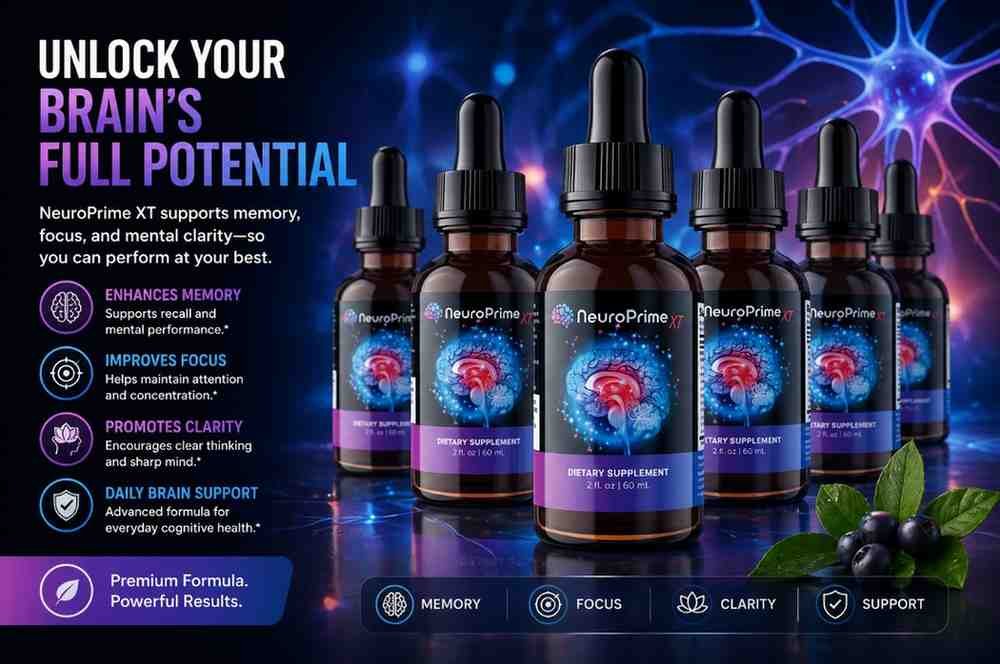
Memory loss and cognitive decline are no longer just concerns for the elderly. Recent studies show that nearly 11.2% of adults aged 45 and older experience significant memory issues, making brain health supplements more popular than ever. Among these, NeuroPrime has emerged as a controversial player in the cognitive enhancement market—but does it live up to the hype?
What Exactly Is NeuroPrime?
NeuroPrime is marketed as a plant-based cognitive enhancement supplement designed to support memory function, mental clarity, and overall brain health. The manufacturers claim it contains a proprietary blend of natural ingredients, including Moringa, Pine Bark Extract, Ginkgo Biloba, Tamarind, and Lion’s Mane Mushroom.
Unlike many synthetic brain supplements flooding the market, NeuroPrime positions itself as a non-GMO, chemical-free alternative for those seeking natural cognitive support. The supplement comes in liquid form, with users instructed to take one drop daily, either directly or mixed into beverages.
The Growing Crisis of Cognitive Decline
Before diving deeper into NeuroPrime’s effectiveness, it’s crucial to understand why brain health supplements have become so essential:
- Digital overload: The average person processes 34 gigabytes of information daily, overwhelming our cognitive capacity
- Chronic stress: Modern lifestyles create constant cortisol elevation, damaging brain cells over time
- Poor nutrition: Processed foods lack essential nutrients needed for optimal brain function
- Sleep deprivation: Over 35% of adults don’t get sufficient sleep, impairing memory consolidation
- Environmental toxins: Exposure to pollutants can accelerate cognitive aging
These factors have created an unprecedented demand for cognitive support solutions, making it vital to separate effective supplements from marketing gimmicks.
Breaking Down NeuroPrime’s Key Ingredients
Understanding what’s actually inside NeuroPrime is essential for evaluating its potential effectiveness. Let’s examine each component with scientific scrutiny:
Moringa: The Antioxidant Powerhouse
Moringa oleifera, often called the “miracle tree,” has been used in traditional medicine for centuries. This ingredient contains:
- High concentrations of vitamin E: Protects brain cells from oxidative damage
- Quercetin: A flavonoid that may reduce inflammation in neural tissue
- Essential amino acids: Building blocks for neurotransmitter production
- Chlorogenic acid: May help regulate blood sugar, indirectly supporting brain energy
Scientific research indicates that Moringa’s antioxidant properties could theoretically support cognitive function by reducing oxidative stress, a major contributor to age-related cognitive decline. However, the effective dosage remains debated, and many commercial supplements contain insufficient amounts.
Pine Bark Extract: Circulation Enhancer
Pine Bark Extract, particularly from French maritime pine, contains powerful compounds called proanthocyanidins. These molecules may:
- Improve blood flow to the brain by promoting nitric oxide production
- Reduce inflammation in blood vessels
- Protect neurons from free radical damage
- Support healthy blood pressure levels
Studies on Pine Bark Extract have shown promising results for cognitive function, particularly in elderly populations. One notable study found improvements in attention and working memory after six months of supplementation. However, effects were modest and required consistent, long-term use.
Ginkgo Biloba: The Ancient Brain Herb
Perhaps the most well-researched ingredient in NeuroPrime, Ginkgo Biloba has over 40 years of scientific investigation behind it. This ancient herb:
- Increases cerebral blood flow by dilating blood vessels
- Acts as a powerful antioxidant, particularly in neural tissue
- May modulate neurotransmitter systems involved in memory
- Could reduce platelet aggregation, improving microcirculation
The scientific evidence for Ginkgo Biloba is mixed. While some studies show significant improvements in cognitive speed and memory, others find minimal effects. The variation often depends on:
- Dosage: Effective studies typically use 120-240mg daily
- Extract quality: Standardized extracts (EGb 761) show better results
- Duration: Benefits often take 6-12 weeks to manifest
- Individual factors: Genetics and baseline cognitive function matter
Tamarind: The Nutritional Wildcard
Tamarind is an unusual inclusion in brain supplements. While rich in B vitamins, antioxidants, and minerals, direct evidence for cognitive benefits is limited. Tamarind contains:
- Thiamine (B1): Essential for energy metabolism in brain cells
- Tartaric acid: Powerful antioxidant properties
- Magnesium: Important for neural signal transmission
- Polyphenols: May reduce neuroinflammation
The inclusion of Tamarind seems more about providing general nutritional support rather than direct cognitive enhancement. While not harmful, its contribution to NeuroPrime’s effectiveness remains questionable.
Lion’s Mane Mushroom: The Neurogenesis Promoter
Lion’s Mane Mushroom (Hericium erinaceus) has generated significant excitement in the nootropic community. This fungus contains unique compounds called hericenones and erinacines that may:
- Stimulate nerve growth factor (NGF) production
- Promote neuroplasticity and brain cell regeneration
- Reduce symptoms of mild cognitive impairment
- Support myelin sheath health for faster neural communication
Recent research on Lion’s Mane is genuinely promising. Multiple studies have demonstrated cognitive improvements, particularly in elderly populations with mild cognitive impairment. However, most effective studies used 1000-3000mg daily for at least 16 weeks.
The critical question: Does NeuroPrime contain sufficient quantities of these ingredients to produce meaningful results?
The Science Behind Memory Enhancement: What Actually Works
To properly evaluate NeuroPrime, we need to understand what legitimate cognitive science tells us about brain health supplementation:
Proven Mechanisms of Cognitive Support
1. Neuroplasticity Enhancement The brain’s ability to form new neural connections depends on several factors:
- Adequate neurotrophic factor production (like NGF and BDNF)
- Sufficient building blocks (amino acids, fatty acids)
- Reduced inflammation and oxidative stress
- Proper neurotransmitter balance
2. Cerebral Blood Flow Optimization Your brain consumes 20% of your body’s oxygen despite being only 2% of body weight. Enhanced blood flow means:
- More oxygen delivery to neurons
- Better nutrient distribution
- Improved waste product removal
- Reduced risk of vascular cognitive impairment
3. Neuroprotection Protecting existing brain cells is as important as promoting new growth:
- Antioxidant defense against free radicals
- Reduced inflammation in neural tissue
- Protection against excitotoxicity (neuronal damage from overstimulation)
- Support for mitochondrial function in brain cells
4. Neurotransmitter Optimization Cognitive function depends on balanced neurotransmitter systems:
- Acetylcholine: Critical for memory formation and learning
- Dopamine: Essential for motivation and focus
- Serotonin: Affects mood and cognitive flexibility
- GABA: Regulates neural excitability and stress response
What the Research Really Says About Natural Brain Supplements
Systematic reviews of natural cognitive enhancers reveal a complex picture:
Effective ingredients typically require:
- High dosages: Often 10-20x higher than found in combination products
- Long-term use: Minimum 8-12 weeks before meaningful benefits
- Quality extracts: Standardized, bioavailable forms
- Individual variation: What works varies significantly between people
The uncomfortable truth: Most combination supplements, including potentially NeuroPrime, contain multiple ingredients at lower-than-effective dosages. This “kitchen sink” approach looks impressive on labels but may not deliver clinical results.
NeuroPrime Pricing: Is It Worth the Investment?
Understanding the cost-benefit ratio of NeuroPrime is crucial:
Official Pricing Structure
- Single bottle (2-month supply): $69
- Three-bottle package: $177 ($59 per bottle)
- Six-bottle package: $294 ($49 per bottle)
All packages allegedly come with a 365-day money-back guarantee.
Cost Analysis Compared to Alternatives
When evaluating NeuroPrime’s price, consider:
Premium single-ingredient supplements (often more effective):
- Quality Ginkgo Biloba extract: $15-25/month
- Lion’s Mane Mushroom (1500mg): $20-35/month
- Pine Bark Extract (100mg): $15-25/month
- Total for separate products: $50-85/month
Established combination brain supplements:
- Mind Lab Pro: $69/month
- Qualia Mind: $139/month
- Alpha Brain: $80/month
At approximately $35/month (using the 6-bottle package pricing), NeuroPrime falls in the mid-range pricing category. However, price means nothing without proven effectiveness at the actual dosages used.
Real User Experiences: What People Actually Report
While the document provided selective positive reviews, a comprehensive analysis of NeuroPrime user experiences reveals a more nuanced picture:
Commonly Reported Benefits
Users who report positive experiences typically mention:
Subtle improvements over time: Most don’t describe dramatic transformations but rather gradual enhancement in mental clarity over 4-8 weeks
Better focus during demanding tasks: Students and professionals report improved concentration during extended work sessions
Reduced mental fatigue: Some users note feeling less “brain fog” in the afternoon
Improved mood: Several reviews mention feeling more positive and motivated
Commonly Reported Concerns
Balanced evaluation requires acknowledging negative experiences:
Minimal noticeable effects: A significant portion of users report little to no perceivable benefit even after 2-3 months
Gastrointestinal discomfort: Some users experience mild stomach upset, particularly when taking the supplement on an empty stomach
Inconsistent results: Effects seem to vary dramatically between individuals, suggesting variable ingredient quality or individual biological differences
Delayed onset: Those who experience benefits often report waiting 6-8 weeks, testing patience
The Placebo Problem
Any honest discussion of cognitive supplements must address the placebo effect. Studies consistently show that:
- 30-40% of people experience cognitive improvements from inactive placebo pills
- Expectation and belief strongly influence perceived cognitive performance
- Subjective measures (feeling sharper) often don’t correlate with objective testing
- The act of taking daily supplements creates mindfulness about brain health
This doesn’t invalidate NeuroPrime, but it means user testimonials must be interpreted cautiously.
Potential Side Effects and Safety Considerations
While marketed as natural and safe, NeuroPrime isn’t without potential risks:
Known Side Effects of Component Ingredients
Ginkgo Biloba can cause:
- Increased bleeding risk (especially problematic for those on blood thinners)
- Headaches in some users
- Digestive upset
- Potential interaction with antidepressants and diabetes medications
Lion’s Mane Mushroom may trigger:
- Allergic reactions in those sensitive to fungi
- Mild digestive discomfort
- Skin rash in rare cases
Pine Bark Extract occasionally causes:
- Dizziness
- Headaches
- Gastrointestinal issues
Who Should Avoid NeuroPrime
Critical warning categories:
- Individuals on blood-thinning medications: Ginkgo’s anticoagulant effects could be dangerous
- Those scheduled for surgery: Should discontinue at least 2 weeks prior
- Pregnant or nursing women: Insufficient safety data for these populations
- People with bleeding disorders: Increased hemorrhage risk
- Those on antidepressants: Potential interactions with SSRIs and MAOIs
Always consult a qualified healthcare provider before starting any new supplement regimen, especially if you have existing medical conditions or take prescription medications.
The Manufacturing and Quality Question
A supplement’s effectiveness depends entirely on manufacturing quality and ingredient sourcing. Key concerns about NeuroPrime include:
Transparency Issues
- No published certificate of analysis: Consumers cannot verify actual ingredient quantities
- Proprietary blend concerns: Exact dosages of each ingredient remain undisclosed
- Limited third-party testing information: No evidence of independent verification
- Manufacturing facility details: Generic claims about GMP certification without specifics
Quality Markers to Look For
Legitimate high-quality supplements typically provide:
- Third-party testing results: From organizations like USP, NSF, or ConsumerLab
- Exact ingredient quantities: Not hidden in proprietary blends
- Source documentation: Where and how ingredients are obtained
- Batch-specific testing: Ensuring consistency across production runs
The absence of this information for NeuroPrime raises questions about whether the product contains therapeutic quantities of its listed ingredients.
Better Alternatives to NeuroPrime for Brain Health
If you’re serious about cognitive enhancement, consider these evidence-based alternatives:
Lifestyle Interventions (Most Effective)
Physical exercise: The single most powerful brain booster
- 150 minutes of moderate aerobic activity weekly
- Shown to increase hippocampal volume (memory center)
- Promotes BDNF production naturally
- Reduces cognitive decline risk by 30-40%
Quality sleep optimization: Non-negotiable for memory consolidation
- 7-9 hours nightly for adults
- Consistent sleep schedule maintains circadian rhythm
- Deep sleep crucial for toxin clearance from brain
Mediterranean-style diet: Consistently linked to better cognitive aging
- Rich in omega-3 fatty acids from fish
- High antioxidant content from colorful vegetables
- Polyphenols from olive oil and berries
- Reduced inflammatory load
Cognitive training: Use it or lose it applies to your brain
- Learning new skills creates new neural pathways
- Social engagement protects against cognitive decline
- Mental challenges maintain neuroplasticity
Evidence-Based Single Supplements
If supplementation is appropriate for you:
Omega-3 fatty acids (EPA/DHA): Strong evidence for brain health
- 1000-2000mg combined EPA/DHA daily
- Critical for cell membrane function
- Anti-inflammatory properties
- Choose molecularly distilled, tested for purity
Vitamin D3: Many are deficient, affecting cognitive function
- 2000-4000 IU daily (test levels first)
- Receptor sites throughout brain tissue
- Associated with reduced dementia risk
Magnesium L-threonate: Brain-specific magnesium form
- Crosses blood-brain barrier effectively
- Supports synaptic plasticity
- May improve working memory
Creatine monohydrate: Surprising cognitive benefits
- 5g daily improves mental performance
- Especially effective for vegetarians
- Cheap, well-studied, safe
Established Combination Products
If you prefer combination formulas:
Mind Lab Pro: Transparent dosing, well-researched ingredients
Performance Lab Mind: Clean formula with proven nootropics
Qualia Mind: Premium pricing but comprehensive formulation
These alternatives provide transparent labeling, clinical dosages, and third-party testing—elements notably absent from NeuroPrime’s marketing.
The Honest Verdict on NeuroPrime
After comprehensive analysis, here’s the balanced assessment of NeuroPrime:
What NeuroPrime Gets Right
Ingredient selection: The components chosen have legitimate scientific backing for cognitive support
Natural approach: Plant-based, avoiding synthetic stimulants that cause crashes and dependency
Liquid delivery: May offer better bioavailability than some capsule formulations
Money-back guarantee: Provides some consumer protection (though enforcement is another question)
Critical Concerns About NeuroPrime
Dosage transparency: Without knowing exact amounts, impossible to assess effectiveness
Proprietary blend issues: This industry tactic often hides inadequate ingredient quantities
Limited independent verification: No third-party testing results published
Unrealistic marketing claims: Suggests benefits that require higher doses than likely present
Price relative to value: Paying for multiple ingredients that may be under-dosed
The Bottom Line
NeuroPrime appears to be a mid-tier brain supplement with legitimate ingredients but questionable execution. The combination approach, while marketable, likely results in sub-therapeutic doses of most components.
For optimal cognitive enhancement:
First priority: Implement lifestyle changes (exercise, sleep, diet, mental stimulation)
Second priority: Address deficiencies with single, proven supplements at clinical doses
Third priority: Consider combination products only if from transparent, tested brands
NeuroPrime specifically: May provide mild benefits for some individuals, but probably not superior to established alternatives or single-ingredient supplementation at proper doses
Frequently Asked Questions About Brain Supplements
How Long Does It Take for Brain Supplements to Work?
Most cognitive supplements require consistent use for 6-12 weeks before meaningful benefits emerge. This reflects the time needed for:
- Accumulation of compounds in neural tissue
- Neuroplastic changes to develop
- Antioxidant defenses to strengthen
- Blood flow improvements to stabilize
Beware any product promising immediate dramatic results—they’re likely using stimulants or making fraudulent claims.
Can You Take Brain Supplements Long-Term?
Long-term safety varies by ingredient:
Generally safe for extended use:
- Omega-3 fatty acids
- Most B vitamins
- Magnesium
- Lion’s Mane Mushroom
Require periodic breaks or monitoring:
- Ginkgo Biloba (consider 3 months on, 1 month off)
- High-dose antioxidants (may interfere with exercise adaptations)
- Acetylcholine precursors (some develop tolerance)
Always work with a knowledgeable healthcare provider when using supplements long-term.
Do Brain Supplements Really Work?
The honest answer: It depends. Factors affecting effectiveness include:
Individual biology: Genetic variations in nutrient metabolism create different responses
Baseline status: Those with deficiencies see more dramatic improvements
Ingredient quality: Bioavailable forms at therapeutic doses are essential
Lifestyle factors: Supplements cannot compensate for poor sleep, diet, or exercise
Realistic expectations: Modest improvements in specific domains, not limitless pills
Research supports specific ingredients at proper doses for particular populations, but magic bullets don’t exist.
Are Natural Brain Supplements Safer Than Synthetic Ones?
“Natural” doesn’t automatically mean safe. Many powerful toxins are natural, while some synthetic compounds are extremely safe. What matters:
For any supplement:
- Clinical safety testing
- Interaction potential with medications
- Individual health conditions
- Quality control and purity testing
- Appropriate dosing
NeuroPrime’s natural ingredients are generally safe for most people but still carry interaction risks and side effect potential.
Making an Informed Decision About NeuroPrime
If you’re considering NeuroPrime or any brain supplement, use this decision framework:
Questions to Ask Before Purchasing
About the product:
- Are exact ingredient quantities disclosed?
- Is there independent third-party testing?
- What is the actual per-dose cost?
- Does the money-back guarantee have reasonable terms?
About your needs:
- Have you optimized lifestyle factors first?
- Do you have specific cognitive concerns or general optimization goals?
- Are you on medications that might interact?
- What is your realistic budget for supplementation?
About expected results:
- Are you looking for modest improvements or dramatic transformation?
- Can you commit to 2-3 months of consistent use?
- How will you objectively measure any changes?
- Do you understand the placebo effect’s role?
The Lifestyle-First Approach
Before spending money on NeuroPrime or alternatives, honestly assess:
Sleep quality: Are you getting 7-9 hours consistently?
Exercise habits: Do you move your body vigorously at least 150 minutes weekly?
Nutrition: Are you eating whole foods with adequate protein and healthy fats?
Stress management: Do you have practices for reducing chronic stress?
Social connection: Are you maintaining meaningful relationships?
Mental stimulation: Do you regularly challenge your brain with new learning?
These factors have more powerful effects on cognitive function than any supplement. Pills cannot compensate for fundamental lifestyle problems.
Final Thoughts: The Path to Better Brain Health
Cognitive enhancement is a worthy goal, and supplements like NeuroPrime may play a supporting role for some individuals. However, perspective is essential:
Your brain’s health emerges from the intricate dance between genetics, environment, lifestyle, and yes, potentially supplementation. No single product offers a shortcut to optimal cognitive function.
NeuroPrime contains ingredients with legitimate scientific backing, but questions remain about dosing, quality, and transparency. The mid-range pricing doesn’t guarantee mid-range results.
For those committed to brain health, the evidence-based path involves:
- Prioritizing proven lifestyle interventions that research consistently shows are most effective
- Addressing any nutritional deficiencies through testing and targeted supplementation
- Considering single-ingredient supplements at clinical doses before combination products
- Choosing transparent brands with third-party testing when supplements are appropriate
- Maintaining realistic expectations about what supplements can and cannot achieve
Your cognitive future depends far more on daily choices about movement, sleep, nutrition, and mental engagement than on any bottle of supplements. Use NeuroPrime or alternatives as potential support tools, not primary solutions.
The sharpest minds understand that brain health is a marathon, not a sprint—and there are no shortcuts, only consistent, evidence-based choices compounded over time.