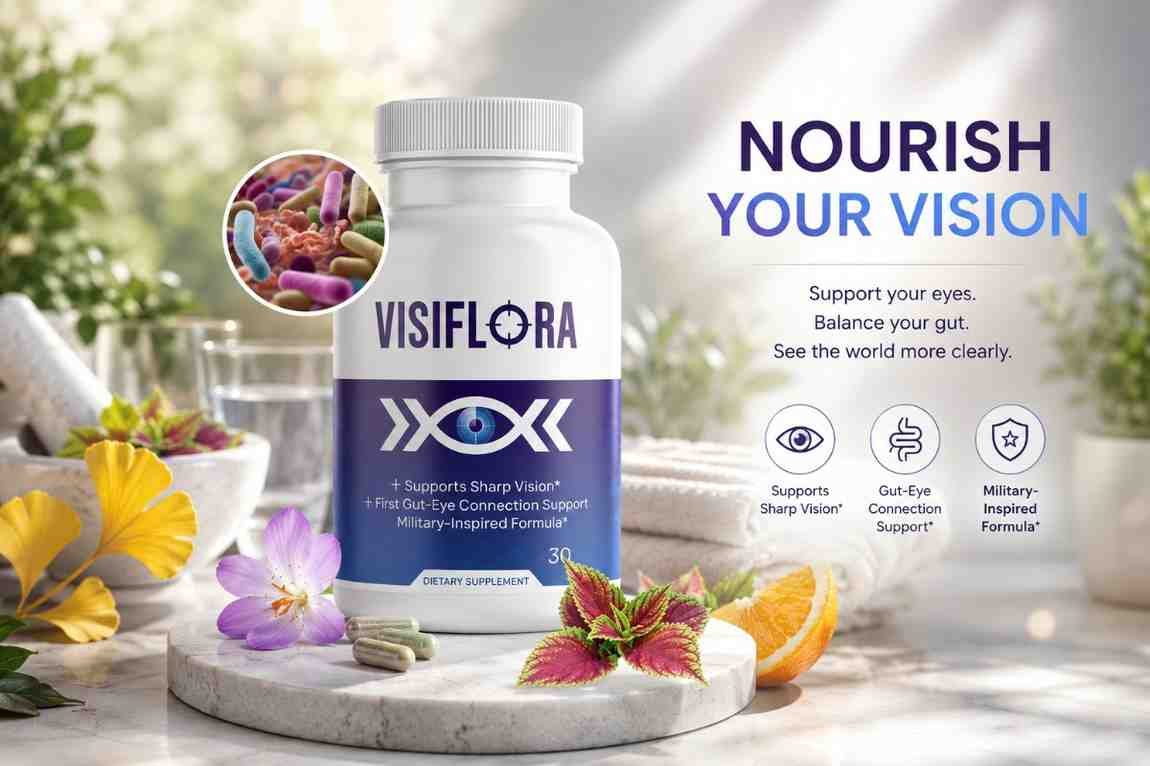
Vision health supplements have flooded the market in 2026, and VisiFlora has emerged as one of the most discussed formulations. But does this gut-eye vision supplement live up to its claims, or is it just another overhyped product?
This comprehensive, research-backed analysis examines every aspect of VisiFlora supplement, from its ingredient profile to clinical evidence, pricing structure, and real-world effectiveness. If you’re considering purchasing VisiFlora for eye health, this detailed review will help you make an informed decision.
What Exactly Is VisiFlora? Understanding the Formula
VisiFlora is marketed as a comprehensive vision support supplement that takes a unique dual-approach strategy. Unlike conventional eye supplements that focus solely on retinal nutrients, VisiFlora combines 22 carefully selected ingredients targeting both direct eye health and gut health optimization.
The manufacturer positions VisiFlora as a “precision vision support system” based on emerging research into the gut-eye axis – the bidirectional communication pathway between intestinal health and ocular function.
VisiFlora’s Core Philosophy: The Gut-Eye Axis Explained
The gut-eye connection represents one of the most fascinating developments in modern ophthalmology research. According to published studies in 2024 and 2025, the composition of gut bacteria and intestinal barrier integrity may significantly influence eye health through several mechanisms:
Systemic Inflammation Pathways: When the gut barrier becomes compromised (a condition called increased intestinal permeability), bacterial components like lipopolysaccharides (LPS) can enter the bloodstream. Research published in Frontiers in Medicine (2024) documented how these compounds activate inflammatory cascades that may affect retinal tissue.
Microbial Metabolite Production: Beneficial gut bacteria produce short-chain fatty acids and other metabolites that regulate immune function throughout the body, including the eyes. Disruption of this microbial balance has been associated with various ocular conditions.
Nutrient Absorption Efficiency: A healthy gut microbiome optimizes the absorption of fat-soluble vitamins and carotenoids essential for eye health, including lutein, zeaxanthin, and Vitamin A.
A comprehensive 2025 review in International Ophthalmology analyzed research spanning 2020-2025, finding consistent associations between gut dysbiosis and multiple eye conditions including dry eye disease, glaucoma, age-related macular degeneration (AMD), and diabetic retinopathy.
Critical Context: While this research is scientifically valid and published in peer-reviewed journals, it’s important to understand that these are early-stage findings. The gut-eye axis represents an active research area, not an established treatment protocol. No finished supplement product has been clinically proven to improve vision specifically through gut modulation.
Complete VisiFlora Ingredient Breakdown: What Does Science Say?
VisiFlora’s 22-ingredient formula is organized into four distinct categories. Here’s an evidence-based analysis of each component:
Vision Defense Matrix: Direct Retinal Support
Astaxanthin – This powerhouse carotenoid deserves special attention. Astaxanthin possesses unique molecular properties that allow it to cross the blood-retinal barrier, delivering antioxidant protection directly to retinal tissues.
Research published in Nutrients documented multiple human and animal studies exploring astaxanthin’s potential benefits for:
- Reducing oxidative stress markers in retinal tissue
- Supporting accommodation (the eye’s focusing ability)
- Reducing digital eye strain and fatigue
- Potential protective effects in diabetic retinopathy and AMD
Japanese research has specifically examined astaxanthin supplementation in individuals with extended screen time exposure, showing improvements in subjective eye fatigue measures and accommodation function.
Important clarification: You may encounter claims that astaxanthin is “6,000 times more powerful than Vitamin C.” This refers to singlet oxygen quenching capacity in laboratory assays – a specific test tube measurement that doesn’t directly translate to clinical outcomes in human eyes.
Vitamins C, E, Copper, Selenium, and Chromium – These micronutrients form the foundation of evidence-based eye supplementation. The landmark AREDS (Age-Related Eye Disease Study) and AREDS2 trials, conducted by the National Eye Institute over multiple years with thousands of participants, established that specific combinations of these nutrients may reduce progression risk in intermediate AMD.
These studies represent some of the highest-quality evidence available in nutritional ophthalmology research. The AREDS2 formulation specifically includes Vitamins C, E, zinc, copper, lutein, and zeaxanthin.
Gut-Eye Barrier Complex: Intestinal Health Support
Grape Seed Extract, Rutin, and Quercetin – VisiFlora describes these as the “Gut Armor Trio.” Each compound has documented antioxidant and anti-inflammatory properties:
Quercetin has been specifically researched for effects on intestinal barrier function and inflammatory pathway modulation. Published studies have explored its potential to support tight junction proteins that maintain gut barrier integrity.
Grape seed extract contains proanthocyanidins – polyphenolic compounds studied for microcirculation support and oxidative stress reduction across various tissue types.
Rutin (a flavonoid glycoside) has been investigated for vascular health support and antioxidant activity.
Context matters: While the manufacturer references traditional Japanese use for blood-retinal barrier support, this represents historical application rather than clinical validation. These ingredients have biological plausibility for gut and vascular health support, but specific claims about blood-retinal barrier reinforcement lack direct human clinical evidence.
Taurine – This conditionally essential amino acid is found in exceptionally high concentrations in retinal tissue, where it plays multiple functional roles including:
- Retinal cell osmoregulation (fluid balance)
- Membrane stabilization
- Antioxidant activity
- Calcium signaling modulation
Animal research has clearly demonstrated that taurine deficiency leads to retinal degeneration. Some emerging research has explored taurine’s relationship to gut-derived inflammatory compounds, though human clinical validation for ocular outcomes remains limited.
Alpha Lipoic Acid (ALA) – Often called the “universal antioxidant” because it functions in both aqueous (water-based) and lipid (fat-based) cellular environments. Alpha lipoic acid has been studied for its ability to regenerate other antioxidants including Vitamins C and E, potentially extending their protective activity.
Research has also explored ALA in the context of diabetic complications, including diabetic retinopathy, though results have been mixed across different study designs.
Vision Performance Boosters: Circulation and Function
Ginkgo Biloba – One of the most extensively studied botanical supplements, ginkgo biloba has been researched for cardiovascular and cognitive health applications. In ophthalmology, some studies have examined effects on retinal and ocular blood flow.
Research results have been inconsistent, with some trials showing modest improvements in blood flow parameters while others found no significant effects. Study quality, dosage standardization, and participant selection have varied considerably across this research.
Marketing claim verification issue: Some VisiFlora promotional materials reference specific percentage improvements in retinal blood flow attributed to the combination of ginkgo biloba and coleus forskohlii. Such precise quantified claims require substantiation from controlled trials matching the exact product formulation and dosage. Consumers should treat these as manufacturer assertions requiring independent verification.
Coleus Forskohlii – This plant extract contains forskolin, which has been primarily studied in ophthalmology for its potential effects on intraocular pressure. Most research has focused on topical applications for glaucoma management rather than oral supplementation, making direct relevance to VisiFlora’s oral formula unclear.
Eyebright (Euphrasia officinalis) – One of the oldest traditional eye remedies in European herbal medicine, eyebright has documented historical use spanning centuries. However, modern clinical research on eyebright remains sparse, with most evidence coming from traditional use patterns rather than rigorous controlled trials.
The manufacturer’s reference to “over 2,000 years of use” is a historical statement about traditional application, not a clinical efficacy claim supported by modern research standards.
Macular and Lens Protection Blend: Targeted Eye Nutrients
Lutein and Zeaxanthin – These two carotenoids represent the most extensively researched dietary compounds for macular health support. Here’s why they’re critical:
Selective Macular Accumulation: Lutein and zeaxanthin are the only dietary carotenoids that selectively accumulate in the macula lutea (the central region of the retina responsible for detailed central vision). They form macular pigment, which serves multiple protective functions.
Blue Light Filtering: Macular pigment acts as a natural filter for high-energy blue and ultraviolet light, reducing oxidative stress on photoreceptor cells.
Antioxidant Defense: Both compounds neutralize reactive oxygen species in retinal tissue.
Clinical Evidence: The AREDS2 study – a large-scale, multi-year clinical trial – demonstrated that replacing beta-carotene with lutein (10mg) and zeaxanthin (2mg) in the AREDS formulation was beneficial for reducing AMD progression risk, with the added safety benefit of eliminating lung cancer risk associated with beta-carotene in smokers.
A 2022 meta-analysis confirmed that lutein and zeaxanthin supplementation increases macular pigment optical density (MPOD) in a dose-dependent manner. Higher MPOD has been associated with lower AMD risk in epidemiological studies.
Timeline expectations: Research indicates that macular carotenoids take approximately 8-12 weeks or longer to accumulate to potentially meaningful levels in macular tissue.
Bilberry Extract – The bilberry-vision connection has an interesting history, including the popular (though possibly apocryphal) story of British WWII pilots consuming bilberry jam for improved night vision.
Modern research presents more nuanced findings:
A 2020 randomized, double-blind, placebo-controlled trial found that 240mg of standardized bilberry extract taken daily for 12 weeks was associated with improvements in ciliary muscle function during extended screen use.
Animal research has demonstrated that bilberry’s anthocyanins (the active flavonoid compounds) can reduce retinal inflammation markers, including LPS-induced inflammation in experimental models.
Important distinction: These findings relate to the specific bilberry extract and dosages studied in research trials, not necessarily to VisiFlora as a finished product at its specific dosage.
Saffron Extract – This is one of VisiFlora’s most scientifically interesting ingredients for macular health support. Multiple clinical trials have investigated saffron supplementation in AMD populations:
A randomized, double-blind, placebo-controlled crossover trial involving 100 adults with mild-to-moderate AMD found that 20mg daily of saffron supplementation was associated with changes in retinal function measurements (electroretinography parameters).
A 12-month extension study following 93 participants found preserved multifocal electroretinogram (mfERG) function throughout the supplementation period, with effects appearing independent of concurrent AREDS supplement use.
Critical context: These studies investigated saffron extract as an isolated ingredient at specific dosages in defined AMD populations. The presence of saffron extract in VisiFlora does not automatically mean the finished product will produce identical results, as overall formulation, dosage, and individual factors all influence outcomes.
Zinc (11mg) – The AREDS studies firmly established zinc as an important nutrient for macular health. The original AREDS protocol used 80mg of zinc, while VisiFlora contains 11mg.
The manufacturer describes this as a “gentle dose” designed to provide support while minimizing gastrointestinal side effects (nausea and stomach upset) that some individuals experience with higher zinc doses. This represents a different approach than the AREDS2 protocol.
Vitamin A (as Beta-Carotene) – Essential for the synthesis of rhodopsin, the light-sensitive protein in retinal rod cells that enables low-light and night vision. Vitamin A deficiency causes night blindness and, in severe cases, complete vision loss.
Lycopene – A carotenoid with antioxidant properties that has been researched for potential protective effects on lens tissue and other ocular structures.
VisiFlora Pricing Structure: Complete Cost Analysis
VisiFlora is sold exclusively through the manufacturer’s official website, not through retail stores or third-party marketplaces like Amazon. According to current pricing information (subject to change):
Starter Package (2 Bottles):
- Listed regular price: $99 per bottle
- Current promotional price: Approximately $69 per bottle
- Total cost: Approximately $138 + shipping
- Claimed savings: $60
Advanced Package (3 Bottles):
- Current price: Approximately $59 per bottle
- Total cost: Approximately $177
- Free US shipping included
- Claimed savings: $302
Ultimate Package (6 Bottles):
- Current price: Approximately $49 per bottle
- Total cost: Approximately $294
- Free US shipping included
- Claimed savings: $434
Digital Bonus Materials Included
All packages include three digital ebooks according to manufacturer information:
- The Military Vision Protection Manual
- The Gut-Eye Healing Protocol
- The 48-Hour Vision Jump-Start
Important pricing notes: Promotional pricing and package availability may change without notice. Always verify current offers, shipping costs, and terms directly on the official website before purchasing.
International Shipping Availability
According to company shipping policy, VisiFlora ships to:
- United States (mainland, Alaska, Hawaii)
- Canada
- United Kingdom and Ireland
- Australia and New Zealand
Shipping fees and delivery timelines vary by destination. International customers should confirm current shipping costs and import regulations before ordering.
VisiFlora Money-Back Guarantee: Understanding the Refund Policy
The manufacturer advertises a 60-day money-back guarantee, but understanding the specific terms is essential:
60-Day Window: The guarantee period begins from the date you receive the order, not the purchase date.
Eligibility Requirements: According to the published refund policy, unopened items qualify for full refund minus original shipping fees.
Return Shipping: Customers are responsible for return shipping costs.
Processing: Returns must be sent to the warehouse address provided in the refund policy.
No Subscriptions: The manufacturer states this is a one-time purchase with no recurring charges or hidden fees. Charges appear on credit card statements under “BuyGoods.”
Critical recommendation: Before purchasing, read the complete refund policy on the official website to understand exactly what conditions apply to returns and refunds.
Who Should Consider VisiFlora? Detailed Suitability Analysis
VisiFlora May Be Well-Suited For:
Individuals experiencing digital eye strain: If you spend extended hours looking at computer screens, tablets, or smartphones and experience eye fatigue, dryness, or discomfort, VisiFlora contains several ingredients (astaxanthin, bilberry extract, lutein) that have been studied in the context of screen-related eye strain.
People interested in proactive macular health support: For those wanting to support long-term macular health before diagnosis of any condition, VisiFlora’s combination of lutein, zeaxanthin, saffron extract, and antioxidants provides comprehensive macular support compounds.
Those attracted to the gut-eye axis approach: If you find the emerging science connecting gut health to eye health compelling and want a supplement addressing both pathways simultaneously, VisiFlora’s dual-target strategy distinguishes it from conventional eye supplements.
Individuals seeking comprehensive formulation: With 22 ingredients spanning multiple categories (antioxidants, carotenoids, gut support, circulation support), VisiFlora consolidates what might otherwise require multiple separate supplements.
People preferring vegan, non-GMO supplements: VisiFlora is formulated as 100% vegan with non-GMO ingredients, appealing to those with dietary preferences or restrictions.
Alternative Options May Be More Appropriate For:
Individuals with diagnosed eye conditions: If you have been diagnosed with AMD, glaucoma, diabetic retinopathy, cataracts, or any specific eye disease, your ophthalmologist or optometrist should guide supplement selection. The AREDS2 formulation has the strongest clinical evidence for intermediate AMD specifically.
Those requiring exact AREDS2 replication: The AREDS2 protocol uses specific dosages: 500mg Vitamin C, 400 IU Vitamin E, 80mg zinc, 2mg copper, 10mg lutein, and 2mg zeaxanthin. VisiFlora includes similar ingredients but at different dosages and is not designed to replicate AREDS2 exactly.
People taking anticoagulant medications: Several VisiFlora ingredients (ginkgo biloba, bilberry extract, Vitamin E) may interact with blood-thinning medications like warfarin, aspirin, or other anticoagulants. Anyone on these medications must consult their physician before taking VisiFlora.
Individuals on multiple medications: The 22-ingredient formula creates multiple potential interaction points. Anyone taking prescription medications should have their healthcare provider review the complete ingredient list.
Those seeking budget-conscious options: At approximately $49-$69 per bottle depending on package size, VisiFlora is positioned in the premium supplement category. Simpler formulations may cost less.
VisiFlora Usage Instructions and Safety Considerations
Recommended Dosage
According to manufacturer instructions, VisiFlora is taken as one capsule daily with food. The company describes the formula as gentle on the stomach without complicated timing requirements.
Safety Profile and Contraindications
VisiFlora is a dietary supplement, not medication. It is not intended to diagnose, treat, cure, or prevent any disease and should never replace prescribed medical treatment.
Consult a healthcare provider before taking VisiFlora if you:
- Take any prescription medications (especially blood thinners, blood pressure medications, or diabetes medications)
- Have been diagnosed with any eye condition
- Have chronic health conditions
- Are pregnant or nursing
- Are scheduled for surgery (some ingredients may affect bleeding)
- Have known allergies to any ingredients
Potential interactions requiring medical oversight:
- Anticoagulants (warfarin, aspirin, clopidogrel)
- Antiplatelet medications
- Blood pressure medications
- Diabetes medications
- Immunosuppressants
How VisiFlora Compares to Standard Eye Supplements
Most conventional vision supplements in the market focus narrowly on the AREDS2 formulation: lutein, zeaxanthin, Vitamin C, Vitamin E, zinc, and copper. This protocol has the strongest clinical evidence for reducing AMD progression risk in specific populations.
VisiFlora takes a fundamentally different approach by developing what the manufacturer describes as a broader-spectrum formula. Rather than replicating AREDS2, VisiFlora includes AREDS-adjacent nutrients alongside:
- Gut-supportive compounds (quercetin, grape seed extract, taurine)
- Additional carotenoids (astaxanthin, lycopene)
- Botanical extracts (saffron, bilberry, ginkgo biloba, eyebright)
- Circulation-supportive ingredients (coleus forskohlii)
Key Differentiating Factors
Multi-pathway approach: VisiFlora targets antioxidant protection, macular pigment support, retinal blood flow, and gut barrier function simultaneously.
Gut-eye axis focus: The inclusion of gut-health ingredients distinguishes VisiFlora from traditional eye supplements that focus solely on direct retinal nutrients.
Saffron extract inclusion: Saffron has emerging clinical evidence for early AMD support but remains relatively uncommon in mainstream eye supplement formulations.
Dosage differences: VisiFlora’s nutrient dosages differ from AREDS2 specifications, representing a different formulation philosophy.
Important Distinction
If your ophthalmologist has specifically recommended an AREDS2 supplement, VisiFlora should not be considered an equivalent replacement without medical discussion. However, for general vision support in individuals without diagnosed conditions, VisiFlora’s comprehensive approach offers broader coverage across multiple mechanisms.
Setting Realistic Expectations: What VisiFlora Can and Cannot Do
Honest expectations matter more than marketing enthusiasm. Here’s a balanced perspective based on available evidence:
What Ingredient Research Supports
The individual compounds in VisiFlora – particularly lutein, zeaxanthin, astaxanthin, bilberry, and saffron – have been studied in published research for:
- Supporting macular pigment density
- Reducing oxidative stress markers in eye tissues
- Promoting healthy blood flow to retinal tissues
- Supporting visual function during screen use
These are legitimate research areas with published studies in peer-reviewed journals. Several ingredients appear in formulations recommended by eye care professionals.
What Current Evidence Does NOT Support
No dietary supplement has been proven to cure, reverse, or treat eye disease. VisiFlora is not a medical treatment.
The gut-eye axis represents a legitimate scientific investigation area, but manufacturer marketing language around “LPS neutralization” and “retinal detoxification” goes beyond what current clinical evidence substantiates. These are mechanistic hypotheses supported by animal models and epidemiological data, not demonstrated outcomes from clinical trials of this specific product.
VisiFlora as a finished product has not been independently studied in clinical trials. While individual ingredients have research support, the specific combination and dosages in this formula have not been evaluated for synergistic effects or overall efficacy.
Reasonable Timeline Expectations
Based on ingredient-level research:
Macular carotenoids (lutein, zeaxanthin): May take 8-12 weeks or longer to accumulate in macular tissue to potentially meaningful levels.
Astaxanthin: Effects on eye fatigue in published studies were typically measured over 4-12 weeks.
Individual variation: Results differ based on baseline health status, age, diet quality, genetic factors, medication use, lifestyle factors, and consistency of supplementation.
Comprehensive Eye Health Approach
No supplement replaces fundamental eye health practices:
- Regular comprehensive eye examinations
- The 20-20-20 rule for screen use (every 20 minutes, look at something 20 feet away for 20 seconds)
- UV protection (quality sunglasses)
- Diet rich in leafy greens, colorful vegetables, and omega-3 fatty acids
- Blood sugar and blood pressure management
- Not smoking
- Adequate sleep and hydration
VisiFlora should be viewed as one component of a comprehensive eye health strategy, not a standalone solution.
VisiFlora Frequently Asked Questions
Is VisiFlora FDA-approved?
Dietary supplements are not FDA-approved. The FDA does not approve supplements before they reach the market. According to the manufacturer, VisiFlora is produced in a facility following current Good Manufacturing Practices (cGMP).
Can VisiFlora reverse vision loss?
No. VisiFlora is a dietary supplement designed to support eye health, not reverse vision loss or treat eye disease. Anyone experiencing vision loss should see an eye care professional immediately.
How long does a bottle last?
Each bottle contains a 30-day supply (30 capsules) when taken as directed (one capsule daily).
Can I take VisiFlora with my AREDS2 supplement?
This creates potential for overlapping ingredients and excessive dosages. Consult your healthcare provider before combining multiple eye supplements.
Does VisiFlora contain shellfish or animal products?
According to the manufacturer, VisiFlora is 100% vegan and contains no animal products. Astaxanthin is often derived from algae in vegan formulations rather than krill or shellfish.
What if I have a sensitive stomach?
The manufacturer describes VisiFlora as gentle on the stomach and recommends taking it with food. The 11mg zinc dose is specifically lower than AREDS2’s 80mg to minimize nausea potential. However, individual sensitivity varies.
Are there any stimulants in VisiFlora?
According to the manufacturer, VisiFlora is stimulant-free and should not affect sleep or energy levels.
Can I take VisiFlora if I wear contact lenses or glasses?
VisiFlora is a nutritional supplement that does not interfere with corrective lenses. It does not replace prescription eyewear.
How is VisiFlora different from lutein supplements?
Lutein-only supplements provide one or two macular carotenoids. VisiFlora combines 22 ingredients targeting multiple pathways including antioxidant defense, gut health, circulation, and macular support.
What happens if I miss a dose?
Simply resume normal dosing the next day. Do not double up to compensate for missed doses.
Scientific Research Behind the Gut-Eye Axis: Deep Dive
The gut-eye connection deserves deeper examination because it represents VisiFlora’s most distinctive positioning claim.
Published Research Findings
2024 Frontiers in Medicine Review: This comprehensive review examined how microbial metabolites influence ocular health. Key findings included:
- Gut dysbiosis may increase intestinal permeability
- Bacterial components (particularly LPS) can enter circulation when gut barrier is compromised
- LPS activates Toll-Like Receptor 4 (TLR4), triggering inflammatory cascades
- These inflammatory pathways may contribute to retinal inflammation
2025 International Ophthalmology Review: Synthesizing research from 2020-2025, investigators found associations between gut dysbiosis and multiple eye conditions:
- Dry eye disease
- Glaucoma
- Age-related macular degeneration
- Diabetic retinopathy
Consistent patterns included depletion of anti-inflammatory gut bacteria and elevated systemic LPS levels.
Research Limitations and Context
Most evidence is associational: Current research primarily identifies correlations between gut dysbiosis and eye conditions rather than proving causation.
Early-stage field: The gut-eye axis represents emerging science, not established clinical practice.
No supplement validation: No finished supplement product has been clinically proven to improve vision through gut-eye axis modulation.
Mechanism vs. outcome: Research describes biological mechanisms and potential pathways, not validated treatment protocols.
Why This Matters for VisiFlora Evaluation
The science supporting the gut-eye axis is real and published in legitimate peer-reviewed journals. However, marketing claims that frame this emerging research as established product benefits require careful interpretation.
Phrases like “neutralize harmful LPS toxins” or “sweep LPS from your retina” suggest certainty about supplement-driven outcomes that current research does not support. The biological pathways are plausible; whether any specific supplement meaningfully influences these pathways in human eyes remains unproven.
VisiFlora Customer Service and Support
According to manufacturer information, VisiFlora provides customer support for questions before, during, and after purchase. Contact information is available on the official website.
Payment processing: Charges appear on credit card statements under “BuyGoods,” a third-party payment processor.
Order tracking: According to company policy, customers receive tracking information after orders ship.
Support topics: Customer service reportedly handles questions about ingredients, dosage, shipping, returns, and general product information.
Final Analysis: Should You Consider VisiFlora in 2026?
The Strengths of VisiFlora
Evidence-backed ingredients: VisiFlora brings together well-researched compounds including lutein, zeaxanthin, astaxanthin, saffron extract, and bilberry extract – each with meaningful scientific backing in ophthalmology research.
Comprehensive multi-pathway approach: The 22-ingredient formula consolidates antioxidant defense, macular pigment support, blood flow enhancement, and gut barrier support into a single daily capsule.
Emerging science integration: VisiFlora incorporates the gut-eye axis concept, which represents legitimate cutting-edge research, even though clinical applications remain developmental.
Quality manufacturing claims: According to the manufacturer, production follows Good Manufacturing Practices in a facility meeting quality standards.
Vegan and non-GMO: The formulation accommodates dietary preferences and restrictions.
Money-back guarantee: The 60-day satisfaction guarantee (review full terms) lowers trial risk.
Important Considerations and Limitations
No independent clinical trials: VisiFlora as a finished product has not been studied in published clinical trials. Individual ingredients have research support, but the specific combination and dosages in this formula have not been independently validated.
Marketing language concerns: Promotional materials use language (“neutralize LPS toxins,” “sweep toxins from retina”) that frames emerging research as established product benefits. The underlying science is legitimate, but no supplement has clinical proof of vision improvement through gut-eye axis modulation.
Unverified performance claims: Some specific quantified benefits (percentage improvements attributed to ingredient combinations) carry high substantiation burdens that could not be independently verified through the manufacturer’s cited sources.
Not an AREDS2 equivalent: If your eye doctor specifically recommended AREDS2 supplementation, VisiFlora is not a direct replacement without medical consultation.
Dosage transparency: Complete dosage information for all 22 ingredients is not fully disclosed on sales materials, making detailed comparison difficult.
Individual results vary: Outcomes depend on numerous factors including age, baseline eye health, lifestyle factors, consistency, genetics, medications, and other individual variables.
Premium pricing: At $49-$69 per bottle depending on package selection, VisiFlora is positioned in the higher price range for eye supplements.
Who Might Benefit Most From VisiFlora
VisiFlora appears most aligned for individuals who:
- Experience regular digital eye strain and screen fatigue
- Want comprehensive, proactive macular health support
- Find the gut-eye axis research compelling
- Prefer consolidated formulations over multiple separate supplements
- Value vegan, non-GMO ingredients
- Do not have diagnosed eye conditions requiring specific medical protocols
- Are not taking medications with potential interactions
Who Should Explore Alternatives
Consider different options if you:
- Have diagnosed AMD requiring AREDS2 formulation specifically
- Take anticoagulant or antiplatelet medications
- Need budget-conscious supplementation
- Prefer single-ingredient or simpler formulations
- Want products with independent clinical trial validation
- Have been instructed by your eye doctor to use a specific protocol
Conclusion: Making an Informed VisiFlora Decision
VisiFlora represents a well-formulated supplement combining established eye health nutrients with emerging gut-health science. The individual ingredients have legitimate research backing, and the gut-eye axis concept is grounded in published scientific literature.
However, it’s essential to distinguish between ingredient-level research and finished product validation. While the components have individual merit, VisiFlora as a complete formulation has not been independently studied in clinical trials.
The supplement may serve as a comprehensive option for individuals seeking proactive vision support without diagnosed eye conditions, particularly those interested in the multi-pathway approach including gut health optimization.
Anyone with existing eye conditions, those taking medications, or individuals specifically directed to AREDS2 supplementation should consult their healthcare provider before considering VisiFlora.
Remember: No supplement replaces regular eye examinations, healthy lifestyle practices, UV protection, proper screen habits, and medical treatment when necessary. VisiFlora should be viewed as one component of comprehensive eye health strategy, not a standalone solution.
Before purchasing, verify current pricing, refund policy terms, and ingredient information directly on the official VisiFlora website, as promotional offers and policies may change.